Address
Huli District, Xiamen Fujian China 361006
Work Hours
Monday to Friday: 7AM - 7PM
Weekend: 10AM - 5PM
Address
Huli District, Xiamen Fujian China 361006
Work Hours
Monday to Friday: 7AM - 7PM
Weekend: 10AM - 5PM
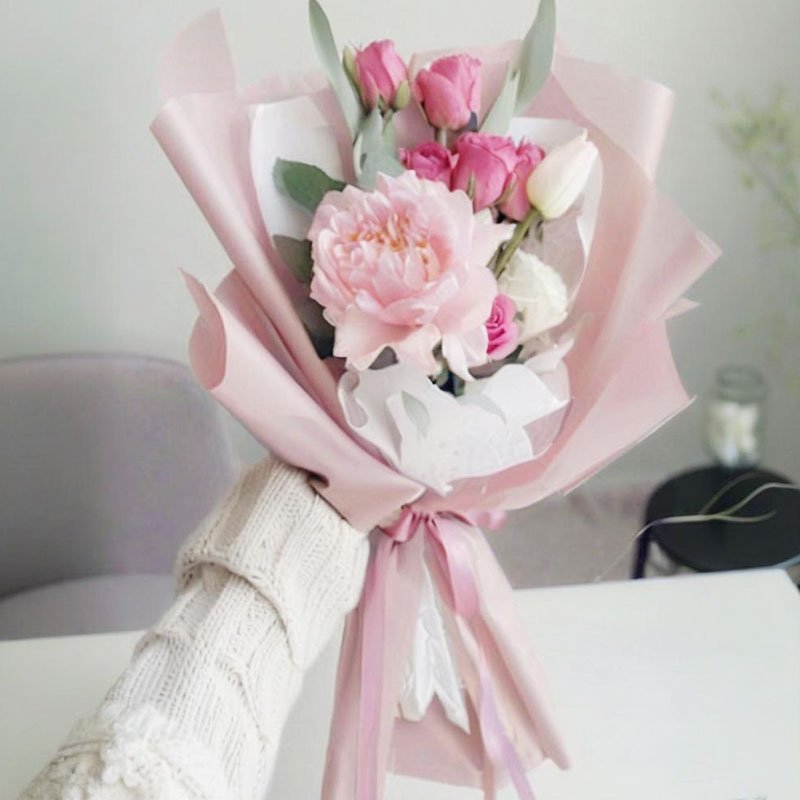
Overwhelmed by wrapping paper choices for your flowers? Worry the wrong paper might tear, look cheap, or clash, ruining your beautiful bouquet? Knowing what defines good paper simplifies your selection process.
The best bouquet wrapping paper balances looks and function. It needs to be strong enough for transport, resist some moisture, complement the flowers, and boost the bouquet's overall presentation and value. The material choice is very important.
Choosing the right wrap is more than just picking a pretty color. It protects your precious flowers and makes a real statement. As someone who supplies these papers daily here at The Floral Wrap, I know the details matter a lot. Let's explore why wrapping is so vital first.
Think wrapping is just an optional decoration? Have you seen bouquets get damaged easily or look incomplete without a proper wrap? Good wrapping protects, improves the look, and truly completes the gift.
Bouquet wrapping is very important. It guards delicate flowers during handling, can help keep moisture near stems, greatly enhances visual appeal, increases how valuable it seems, and completes the presentation for gifting or display.
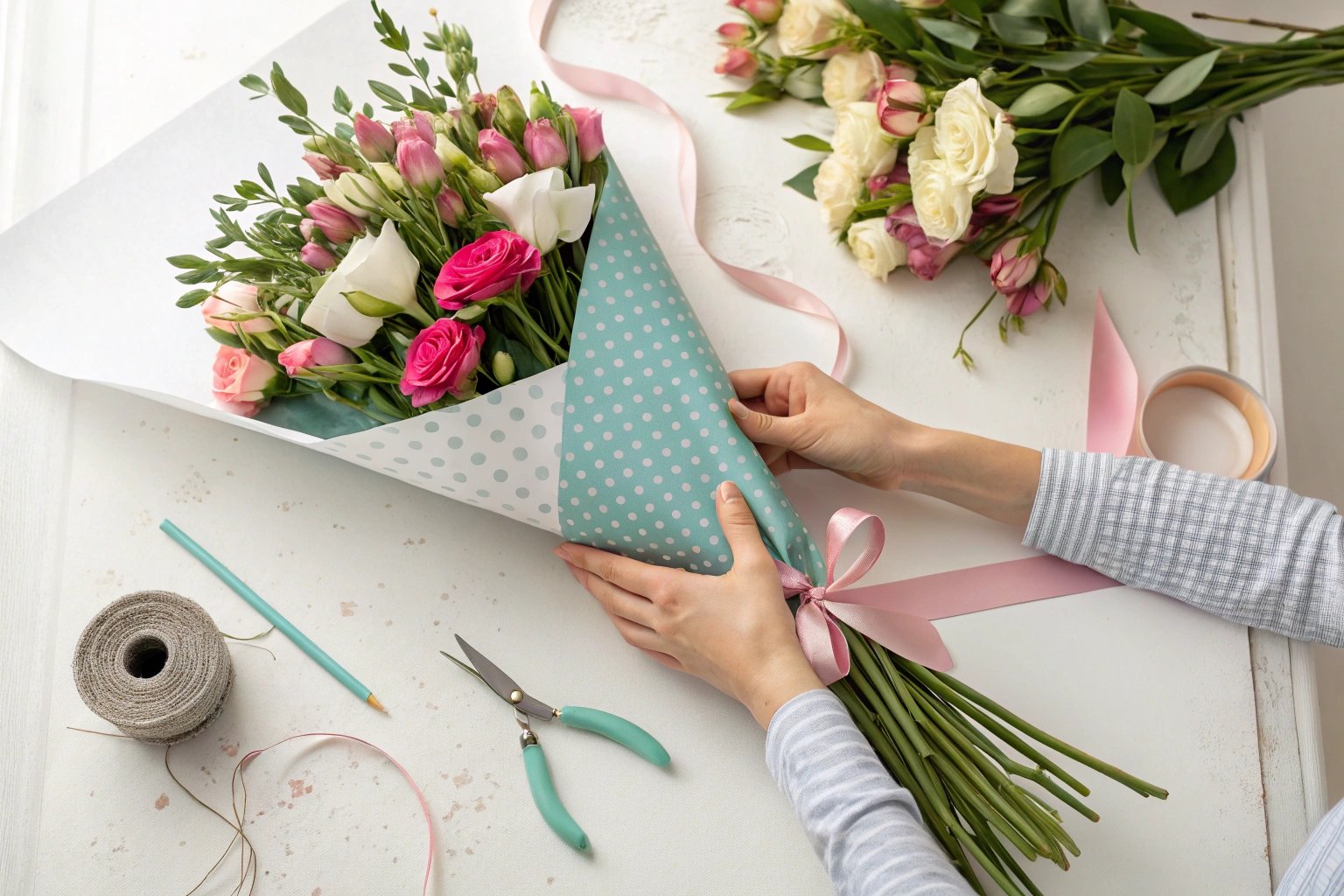
Let's dive deeper into why spending a little thought on wrapping paper is worthwhile. It's not just about covering the stems; it serves several key purposes that benefit both the flowers and the recipient.
Flowers, especially delicate ones, can easily get bruised, bent, or broken during handling and transport.
Think about taking flowers home from the shop or delivering them as a gift. A good wrap makes that journey much safer for the blooms. I've seen unwrapped flowers suffer damage that could have been easily prevented.
The wrapping is the first thing people see, setting the stage for the flowers inside.
Presentation is everything, especially for gifts. The wrapping is like the frame for a picture; it completes the look.
A well-wrapped bouquet simply looks more professional and valuable than loose stems.
While not all wraps are waterproof, the way a bouquet is wrapped can help maintain humidity around the stems, especially if a small water source (like wet cotton wool wrapped in plastic) is included at the base inside the wrap. This is crucial if the bouquet will be out of water for a while.
For businesses like mine, The Floral Wrap, the wrapping paper itself can be part of the brand identity. Using specific colors, materials, or even custom-printed paper reinforces brand recognition.
So, you see, wrapping paper does much more than just hide the stems. It's a functional and aesthetic necessity for presenting flowers at their best.
Confused by names like Kraft, Cellophane, Pearl paper, or Non-woven? Used paper before that got soggy quickly or tore too easily? Let's make the main types clear and discuss their best uses.
Key types include Kraft paper (strong, natural look), Cellophane (clear or colored, waterproof), Non-woven fabric (soft, water-resistant, modern feel), and Tissue paper (delicate, often used for layering). Each has different looks, strengths, and water resistance.
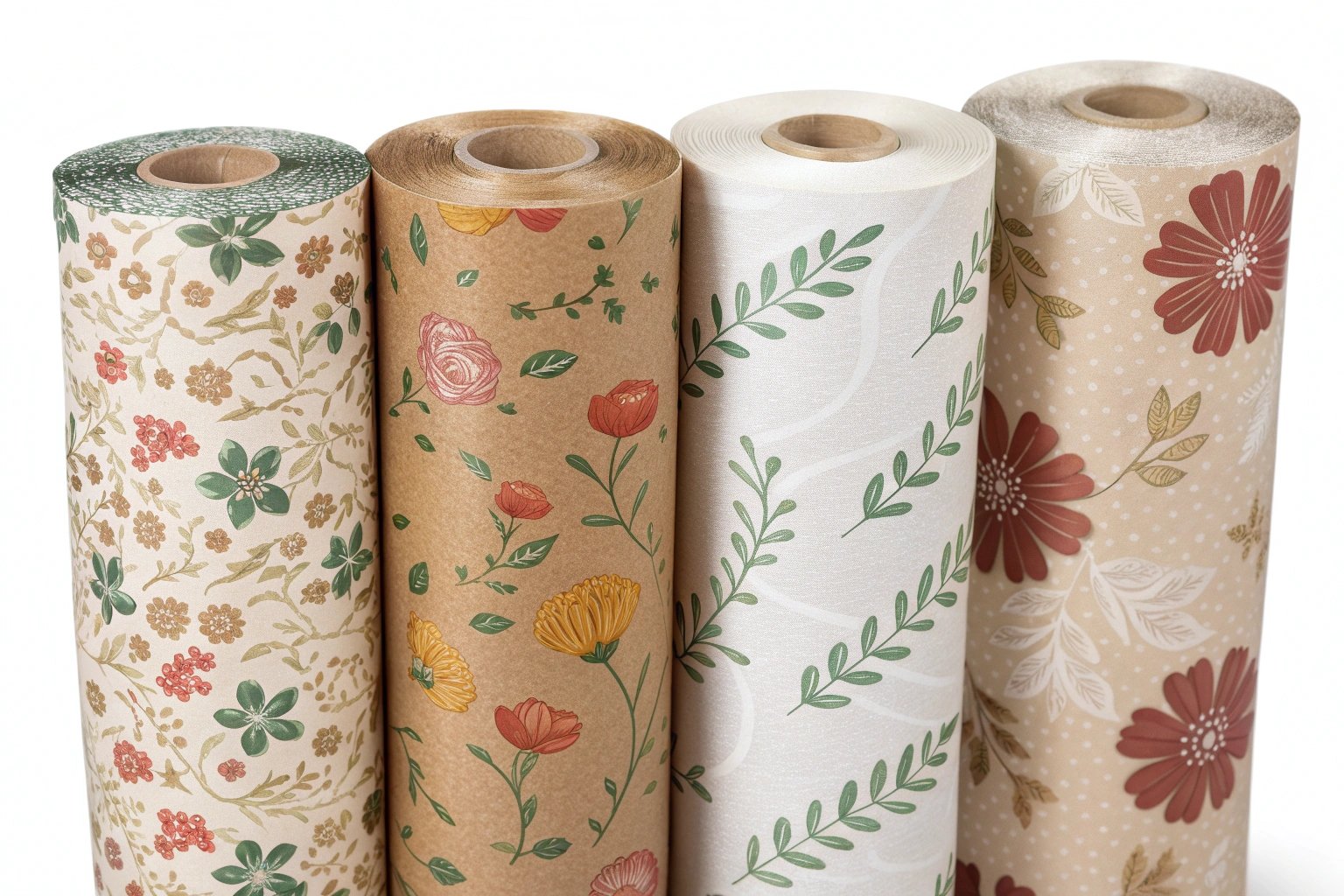
Choosing the right material is probably the most important decision when selecting bouquet wrap. Each material behaves differently and creates a distinct look and feel. Let's break them down.
This is a classic choice, known for its strength and natural appearance.
This is a plastic film, either clear or colored/patterned. BOPP (Biaxially Oriented Polypropylene) is common now.
This material feels like a soft fabric but is often made from synthetic fibers like polypropylene. It has become very popular.
Standard, thin tissue paper is rarely used as the sole wrapping layer for bouquets due to its fragility.
This category includes various decorative papers.
Here’s a quick comparison:
| Material Type | Key Characteristics | Water Resistance | Primary Use | Style Vibe |
|---|---|---|---|---|
| Kraft Paper | Strong, paper feel, natural | Low (unless coated) | Structure, Outer | Rustic, Natural |
| Cellophane (BOPP) | Plastic film, clear or colored, glossy | High | Protection, Outer | Modern, Functional |
| Non-Woven Fabric | Soft, fabric-like, drapes well | Medium to High | Outer, Elegant | Modern, Soft |
| Tissue Paper | Thin, delicate, colorful | Very Low | Inner Layer, Filler | Adds Softness/Color |
| Specialty Papers | Varied (textured, metallic, double-sided) | Varies | Decorative Outer | Varies by type |
Understanding these basic types makes choosing much easier based on the look and function you need.
Have lovely flowers ready but feel unsure which wrapping style or color fits them best? Worry about making a mismatch, like using rustic paper for very formal roses? Matching the paper thoughtfully ensures harmony.
Choose paper by thinking about the occasion (formal vs. casual), the flower colors (aim to complement or contrast nicely), the style you want (rustic, modern, elegant), how durable it needs to be, and water resistance needs. Your budget matters too.
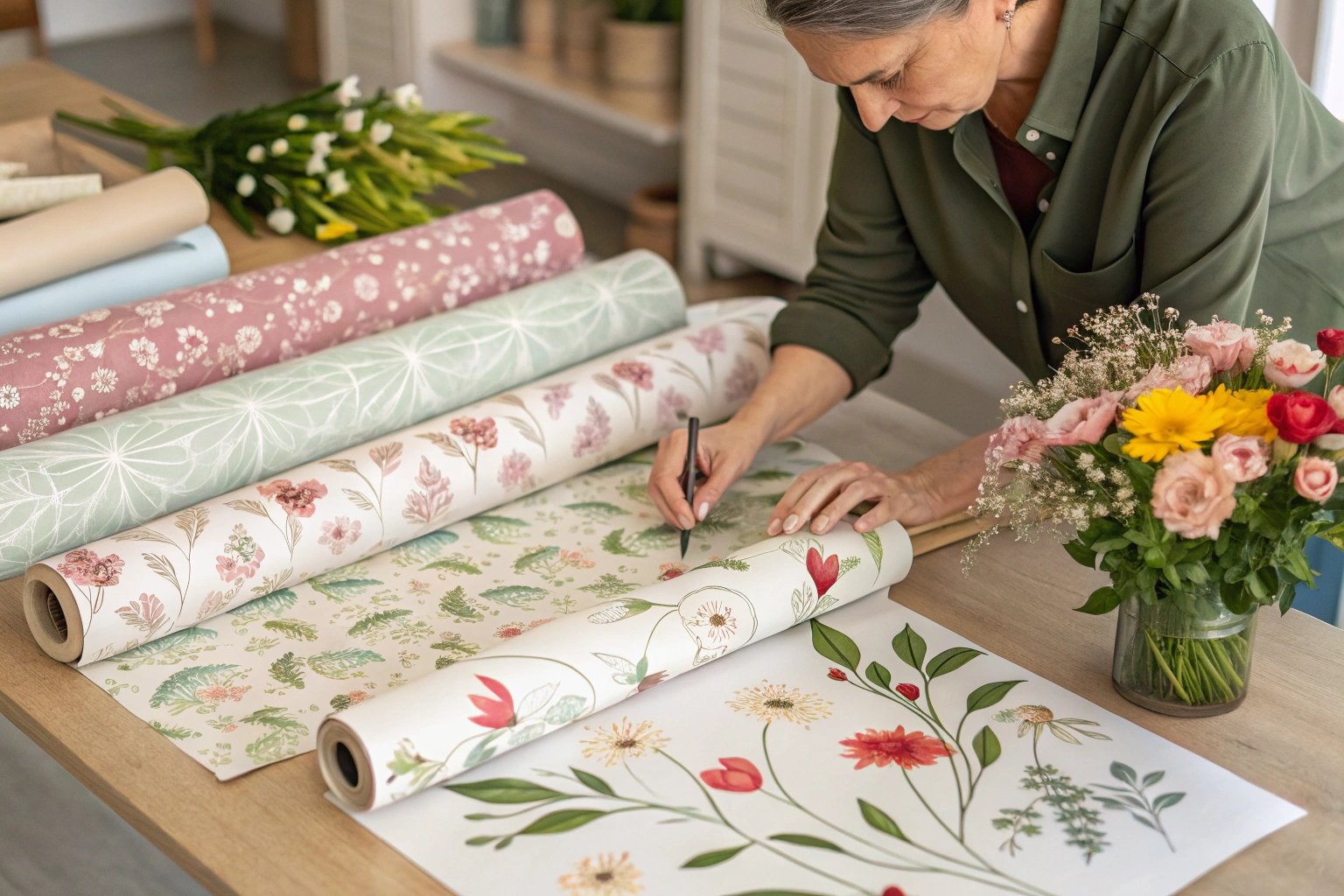
Selecting the perfect wrap involves more than just grabbing the first roll you see. It's about creating a cohesive and appropriate presentation. Here’s a breakdown of factors I consider when helping clients at The Floral Wrap choose their supplies:
The event often dictates the style.
The paper should enhance the flowers, not overpower them.
What overall feeling do you want?
Texture adds another dimension – smooth cellophane feels very different from ribbed kraft or soft non-woven.
How will the bouquet be handled? Will it be out of water long?
Prices vary significantly. Cellophane and basic Kraft are usually the most budget-friendly. Non-woven fabrics and specialty papers tend to cost more. Decide what's appropriate for your needs and budget. Sometimes layering less expensive tissue inside a more premium outer wrap offers a good balance.
If you're a florist or business, is the paper consistent with your brand image? Does it reflect the quality and style you want to project?
Thinking through these points helps narrow down the choices and ensures your wrapping truly complements your beautiful flowers.
Worried about the environmental impact of traditional floral wrapping, especially plastics? Dislike using single-use materials like cellophane that often end up in landfill? Sustainable alternatives are available and definitely gaining traction.
Yes, eco-friendly bouquet wrapping is a significant trend. Popular options include recycled Kraft paper, certified compostable or biodegradable films, papers made from alternative fibers (like grass or bamboo), and reusable fabric wraps inspired by Furoshiki.
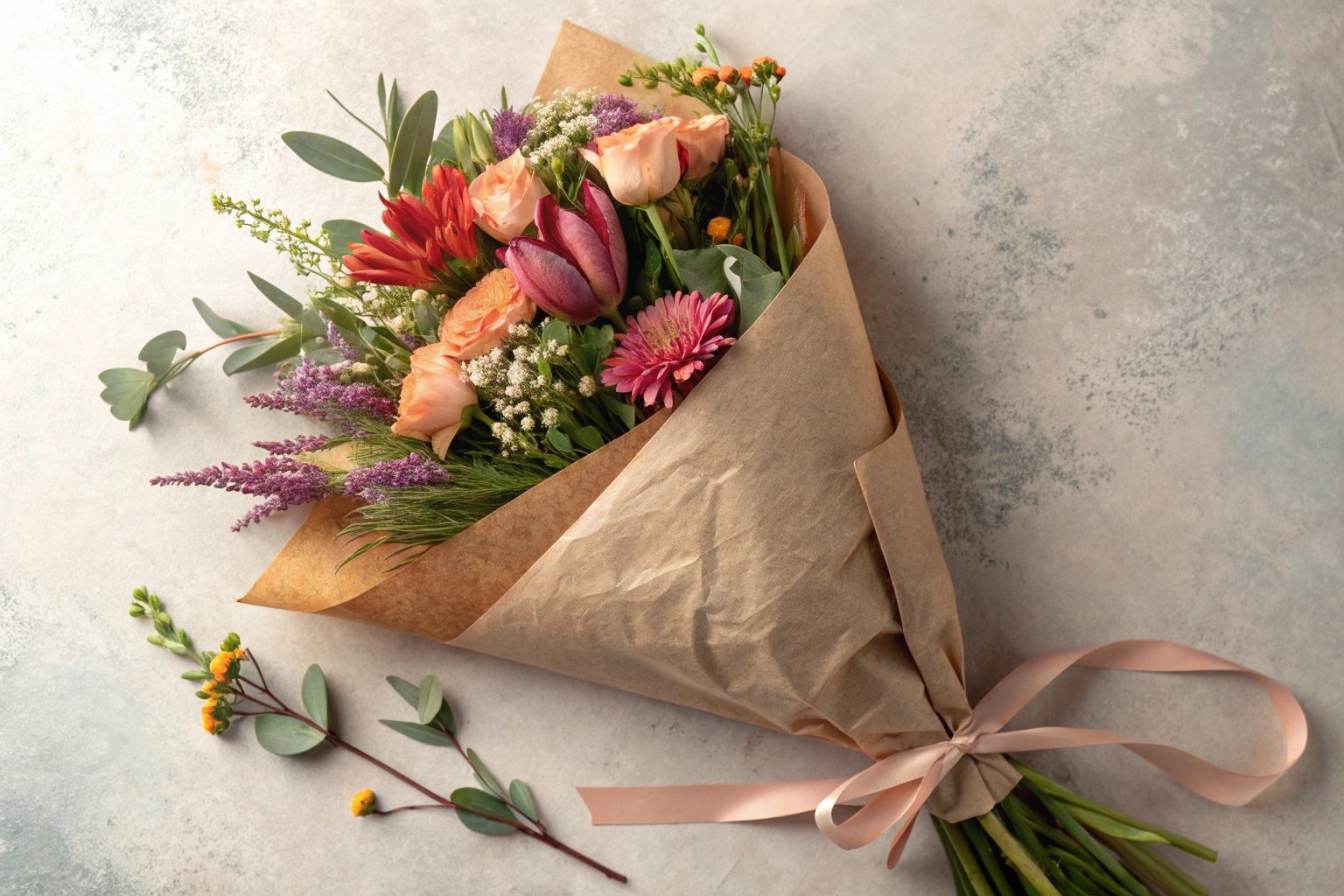
The demand for sustainable options is growing fast, driven by increased environmental awareness from both consumers and businesses. Here at The Floral Wrap, we've definitely seen a shift towards customers asking for and choosing greener alternatives. Let's look closer at what's available.
People are increasingly aware of waste, particularly plastic waste. Using large amounts of plastic film like traditional cellophane for a temporary purpose like wrapping flowers feels less acceptable to many now. Customers actively seek out businesses that offer more sustainable choices. Offering eco-options is becoming good business practice as well as being better for the planet.
As an alternative to traditional plastic cellophane (BOPP), newer films are emerging:
Some manufacturers are experimenting with papers made from faster-growing or waste agricultural fibers, like grass paper or bamboo paper. These can have interesting textures and good environmental profiles.
Inspired by the Japanese tradition of Furoshiki (using fabric squares to wrap gifts), using reusable fabric wraps for bouquets is a stylish and zero-waste option.
It's important to note that some eco-options might have different performance characteristics than traditional materials.
Despite these challenges, the trend is clear. Offering and choosing eco-friendly wrapping options is becoming increasingly important for anyone involved with flowers. It shows responsibility and meets a growing customer demand.
Selecting the best bouquet wrapping paper involves balancing aesthetics, protection, purpose, and maybe even sustainability. Understanding the types available and considering key factors helps you present your flowers beautifully and effectively. Happy wrapping!